





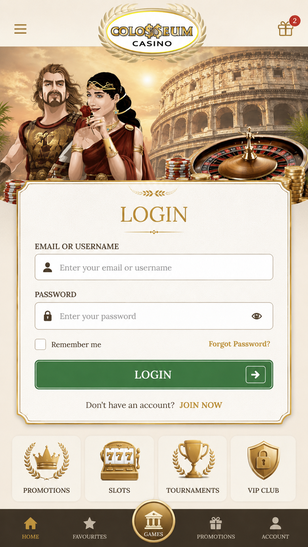
Getting Started With Colosseum Casino Login In Canada
The first minutes on any casino platform usually decide whether the rest of the session feels simple or annoying. Players are not judging the game library yet. They are checking whether the account area is easy to reach, whether the form makes sense, and whether the next step is obvious. In 2026, that basic flow matters as much as any promotion because most people expect to move from entry to play without wasting time.
Picture a player opening the platform after work. They already know how much they want to spend and what kind of session they want - quick slots, a few table rounds, then out. If access feels clean, they stay focused. If the first screen is cluttered, they start second-guessing every click.
What Happens Before The First Session
Before real play begins, most users go through the same routine: they create credentials, confirm contact details, and review the profile basics. It sounds routine because it is. Still, this stage quietly shapes everything that comes later, especially payments and recovery options.
Imagine entering your email too fast, missing one character, and noticing the problem only when a confirmation message never arrives. Usually, careful players spend an extra minute here because fixing a small error later is far more irritating than pausing now.
Common Access Problems And Fixes
Most access problems are ordinary. A saved old password, the wrong keyboard language, a browser that kept stale data, or repeated rushed attempts can interrupt the process. Usually, the best fix is also the simplest one: stop, clear the saved field, enter the details manually once, and reset access only if that really fails.
Say you signed in on desktop earlier and now your phone keeps offering outdated autofill details. That can create a loop of failed attempts for no serious reason. Players who stay calm here usually solve the issue faster than people who keep pressing the same button and hoping the result changes.
Account Setup That Feels Straightforward
Good registration is not about flashy design. It is about clarity. A platform can ask for standard information and still feel smooth if every field is labeled properly, the prompts are readable, and the next action is easy to spot. That sounds basic, but it is exactly where many users decide whether a platform respects their time.
Imagine opening an account late in the evening. You are tired, reading quickly, and you do not want to decode vague labels or wonder why one field rejects your entry. Clear forms reduce that friction. They also lower the chance of mismatched details later, which matters once deposits and payouts enter the picture.
For players in Canada, the practical rule is simple: use accurate information from the start and keep it aligned with the details attached to your preferred payment route. It may feel like boring admin work, but it saves trouble. The same goes for extra account protection. Many people skip security settings until there is a problem. Usually, the smarter move is to set them up early and forget about them until needed.
Documents, Age Checks, And Basic Details
At some stage, a platform may ask users to confirm identity and show that they meet the legal age requirement in their province or territory. That is standard adult-gaming housekeeping, not a dramatic event. Still, it feels much easier when the profile was filled in carefully from day one.
Think of a player who requests a payout and only then notices that a date, address line, or name format does not match their payment record. Now a simple request turns into extra back-and-forth. The better approach is obvious: keep the profile complete before money starts moving.

Games, Lobby Flow, And First Decisions

Once the account is ready, players start judging the platform by navigation. Can they find categories quickly? Are filters useful? Is it easy to move from slots to tables, from browsing to play, and from play back to the cashier without getting lost? These are small questions, but they define the session.
Picture someone who wants a short, controlled evening session. They deposit a modest amount, test a few faster games, then switch to a slower table environment. If the lobby supports that rhythm, the platform feels practical. If the categories are messy, every change of pace becomes work.
A good lobby does not need to be loud. It needs to be readable. Players usually appreciate clean sorting, visible stake information, and a quick path back to balance and account tools. Often, the real first decision is not which game to launch - it is how fast or how cautious the whole session should be.
Player Goal | Typical Action | Why It Matters |
|---|---|---|
Quick visit | Use search or recent-play area | Cuts down browsing time |
Budget control | Check stake level before entry | Helps match play to bankroll |
More variety | Switch categories with filters | Keeps the session organized |
Short phone play | Return to the last section used | Makes stop-and-start use easier |
Better discipline | Review balance before changing games | Prevents drifting into extra spending |
Banking Habits That Make Play Easier
The cashier is where convenience becomes real. Players want to know which payment methods appear in their region, how clearly deposits and payouts are shown, and whether the account explains the next step without making them guess. A platform can look modern, but if the banking area feels vague, trust drops quickly.
Imagine ending a decent session and deciding to cash out instead of continuing. That is when interface quality becomes obvious. If the request path is clear and the status is easy to read, the experience feels orderly. If not, even a good session can end with frustration.
Good habits matter here. Pick one main payment route instead of switching around too often, read the cashier notes before confirming anything, and make sure the personal details on the account match the payment details you are using. Players often skip that last part, then wonder why a routine request suddenly feels slower.
Deposits, Withdrawals, And Timing Expectations
Deposits and payouts may sit in the same cashier, but they do not always move at the same pace. Usually, funding an account is designed for quick entry into play, while cashing out can involve extra checks. That does not mean something is wrong. It means the two flows serve different purposes.
Say you deposit in seconds and expect every later transfer to feel identical. That assumption often creates unnecessary impatience. A more useful mindset is to treat payout timing as something that depends on the method used, the condition of the profile, and whether the account information is already settled.
Limits, Budgeting, And Cooling-Off Tools
Responsible play tools are not only for difficult moments. Deposit caps, reminders, session controls, temporary pauses, and self-restriction settings help structure an ordinary session before it starts drifting. Experienced players often treat them like spending alerts in a banking app - not dramatic, just practical.
Imagine planning a short session and suddenly staying much longer because the next round feels tempting. That is where a limit or timeout helps. For adults in Canada, controlled play usually begins before the first wager, not after the budget is already under pressure.
Mobile Use During A Busy Day
A lot of casino use now happens in fragments. A few minutes in the morning, another look during lunch, then a longer visit at home. Because of that, mobile quality is not a side detail anymore. For many users, it is the main version of the platform.
Picture standing in line and opening the platform with one hand. You want to see your balance, reach a saved category, or check the cashier without pinching and zooming around the screen. Good mobile design makes that feel natural. Poor layout makes even simple actions feel heavier than they should.
The strongest phone experience is rarely the flashiest one. It is usually the version that loads cleanly, keeps buttons readable, and remembers where you left off. In practice, players value stability more than decoration.
Colosseum Casino Sign Up On Phone Or Desktop
The account creation flow should feel familiar on every device, even if the layout changes with screen size. On desktop, players see more at once. On mobile, they need larger fields, clearer spacing, and fewer chances to tap the wrong line.
Imagine beginning the registration process at home on a laptop and finishing it later on your phone while commuting. If the structure stays coherent, that shift feels natural. If not, users start wondering whether they missed a step or entered something incorrectly.
How Players Usually Move Between Devices
Most players do not use one screen only. They browse on desktop, check balances on mobile, and return to a larger display when they want a longer session. That movement is normal, and the account should support it smoothly.
Say you explore categories on a laptop, then reopen the platform on your phone later in the day. You expect the account status, recent activity, and general navigation to feel familiar. When that continuity exists, the platform feels reliable. When it does not, even a simple session starts with friction.
Support, Trust Signals, And Player Experience
Support matters most when something small goes wrong. A stalled password reset, a confusing payment note, or a verification prompt can change how the whole platform feels in minutes. In that moment, players are not looking for slogans. They want a direct explanation and a clear next step.
Imagine sending a question after a routine request does not go through. The best support experience is usually plain: what happened, what you need to do now, and whether any action is required from your side. Even when the answer is not instant, clarity lowers frustration.
Trust also comes from quieter details. Is the transaction history readable? Are limits visible? Can you find safer-play tools without digging through menus? Does the help area explain common problems in normal language? Players build confidence from these ordinary signals far more than from big promises.
For adult users in Canada, a strong overall experience is rarely about one dramatic feature. It is about a series of small things working as expected - entry, account control, payments, mobile flow, and support when needed. When those parts line up, the platform feels easier to return to.